Hardwood floors: a buyer’s guide to construction, species and finishes
Choosing hardwood floors for a home or a project starts with construction, species, dimensions, finish and the conditions in the room. This guide sets out the criteria buyers compare before a specification is confirmed in a quotation.
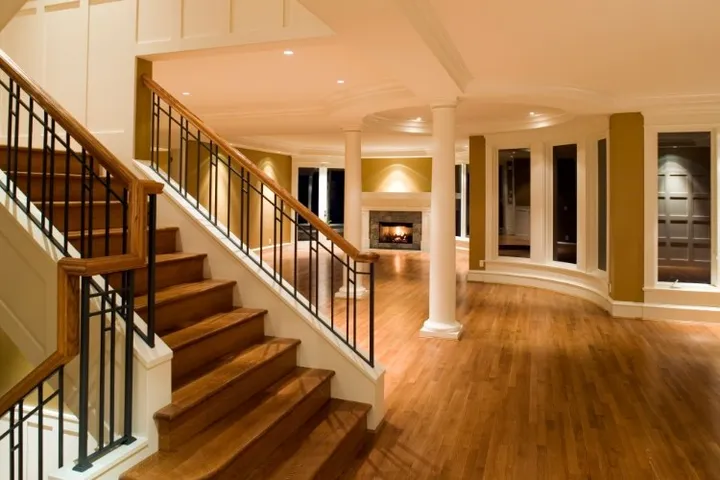
Choosing the Best Hardwood Floors for Your Space
There is no single ranking of the best hardwood floors. A board that suits a busy hallway may struggle where humidity swings, and a species that looks right in a bright living room may need a different finish under heavy use. The practical approach is to compare the points that decide performance, then let the design follow from them.
- Construction: solid timber or engineered boards on a stable core.
- Species and hardness: how the wood wears and how it moves.
- Plank dimensions: width and length set the scale of a room.
- Finish and sheen: matte, satin or gloss, and wear resistance.
- Subfloor and moisture: flat, dry and stable before laying.
- Traffic and maintenance: how much cleaning the space tolerates.
Species, sizes and finishes are confirmed in the quotation. Product construction and finish can then be checked against the room and subfloor conditions.
Herringbone and Parquet Patterns
Herringbone hardwood floors are laid from rectangular blocks with square-cut ends, set in two mirrored groups so that the square end of one block meets the side of another at a right angle. A left-hand block is followed by a right-hand block, and the repeating pair forms a zigzag across the room. The pattern comes from the block geometry rather than the board alone: the length-to-width ratio and the layout decide whether the finished floor looks busy or calm.
Block size and layout affect both design and waste. Long, narrow blocks give a fine pattern and more offcuts at borders and doorways; shorter, broader blocks read larger and simpler. George provides custom herringbone wood flooring for villas, apartments, hotels, restaurants, offices and commercial projects, with dimensions and finishes confirmed in the quotation. Confirm the installation method before ordering, and follow the product-specific instructions.
Comparing Wood Flooring Types
Choosing the best wood flooring means matching the product type to the room. Solid timber puts a single piece of wood underfoot and moves with humidity. Engineered boards place a real wood face on a stable core, which limits that movement. Laminate, rigid-core SPC and flexible-core PVC print a decor on a core, so realism, stability, moisture tolerance, wear, maintenance and installation method follow from the construction, and budget follows from all of them.
- Solid wood: real timber throughout; needs stable indoor humidity.
- Engineered: real wood face on a multilayer core; more stable.
- Laminate: printed wood-look surface on a composite core.
- SPC rigid core: dense mineral core with a printed layer.
- Flexible-core PVC: dry-back glue-down, loose-lay and click formats.
Composite cores sit under several of these products, and formaldehyde rules apply to them in some markets. George supplies hardwood, engineered hardwood, vinyl plank and laminate flooring for projects, plus factory-direct SPC flooring, and confirms the product category and specification in the quotation.
Dark Tones and Finishes
Dark hardwood floors absorb light. In a large, bright room they feel grounded; in a small or north-facing room they can feel enclosed unless walls, ceilings and lighting are kept light. Dark surfaces show pale dust and lint clearly, while scratches read as light marks on a stained surface, which a matte or oiled finish softens. Colour, stain and species are specified options, and George confirms them in the quotation.
Sheen matters as much as colour: gloss reflects light but shows every mark, while matte and brushed surfaces scatter light and hide daily wear. Dark wide planks with a matte finish suit modern interiors; narrow dark boards with satin read more traditional.
Solid Wood and Real Wood Construction
Solid wood flooring is made from a single piece of timber, which gives natural beauty and durability and allows the board to be sanded later, within the limits of the thickness above the tongue. Thickness and width both matter, because wider boards move more across the grain. Prefinished solid wood flooring comes with a protective layer already applied, which makes cleaning easier and saves installation time.
Moisture governs how solid boards perform. The subfloor must be dry and the boards acclimated to the indoor conditions before installation. Follow the product’s own acclimation and moisture instructions, because limits vary by product.
Real hardwood floors are solid timber boards or engineered boards with a real wood face; laminate and SPC wood-look products print an image on a core and contain no wear layer of timber. Engineered boards are generally more stable across humidity swings; for printed products, check the specific product’s water-resistance rating and installation requirements rather than assuming moisture resistance. Refinishing depends on the wear layer or on the thickness above the tongue.
George offers wood flooring in both solid and engineered formats and can provide construction details, moisture requirements and approved installation methods for each option. Solid and engineered wood flooring can be reviewed against the project’s room, subfloor and moisture conditions.
Buying Wood Flooring: What to Compare
A wood flooring sale is worth comparing line by line. Start with construction and the face veneer or wear layer, then species, finish, plank dimensions and grade. Check the quantity against the floor plan with an allowance for cuts and borders, then packing and shipping terms. Cost follows from these items rather than from the product name, and the quotation should show what is included, since boards, underlay, trims, freight and unloading are often handled separately.
Grade matters more than buyers expect. A clear grade shows little colour variation, while a rustic grade keeps knots and mineral streaks; both are legitimate, and the difference shows on a large floor.
To compare properly, send the product type, the specification, the quantity and the destination. Wood flooring orders can start from a minimum order quantity confirmed in the quotation. Project details and a floor plan help, because quantities, borders and layout waste can then be checked together. George can send product specifications, warranty terms and installation documents for review before the order is confirmed.
Installation Methods and Subfloors
A floating hardwood floor is not fixed to the subfloor. The boards are joined to each other and rest on a compatible underlay that provides a light cushion, so the surface moves as one sheet. Vapour protection may require an integrated barrier or a separate membrane, depending on the subfloor and the installation instructions. Subfloor flatness, a clean and dry slab, movement gaps at walls and a moisture check before laying decide whether a floating floor stays quiet and flat. Engineered boards can suit this method, subject to the product instructions.
Floating floors need a gap at the perimeter, hidden by skirting or trim, and clearance under door frames. Runs longer or wider than the board allowance are usually split with a transition profile. Glue-down and nail-down methods need different subfloor preparation and the same moisture checks. Confirm the installation method before the boards are ordered, and follow the product-specific instructions.
For any multilayer engineered wood flooring option, confirm the approved installation method and follow the product-specific instructions, including underlay and perimeter requirements where they apply. George can provide construction details, moisture requirements and approved installation methods for each option, with board construction confirmed in the quotation.
Light and White Tones
White hardwood floors are usually achieved with a whitewash, a lime treatment or a pale stain rather than with a naturally white timber. The treatment sits in the grain instead of covering it, so the species still shows: oak keeps its open grain and figure, while a tighter-grained wood reads smoother and paler. A sample is the only reliable way to judge how a tone behaves in the room’s own light.
Sheen changes the look as much as colour does. Matte and brushed white floors scatter light and hide marks; satin and gloss surfaces show footprints and cleaning streaks. Pale floors suit small and north-facing rooms and interiors that need reflected light, and they pair well with darker furniture. In busy areas a pale floor needs regular dry cleaning and prompt removal of spills.
Hardwood Floors FAQ
Most questions about wood floors come back to the same variables: the building, the traffic and the moisture conditions. Treat each answer below as a starting point for a project specification rather than as a rule, because the details are settled when species, construction and finish are confirmed for the room in question.
Which hardwood floor is best for a project?
There is no single best choice. Match construction to the building. For hardwood, compare solid timber where a real board and later resanding matter with engineered boards where humidity swings and stability matter. Laminate, SPC and PVC are wood-look alternatives rather than hardwood, and can be considered where the moisture risk or the budget points that way. Then fix species, plank size, finish and colour, and confirm the specification in the quotation.
Which hardwood floors are popular now?
Popularity varies by market and project. Buyers can compare design options such as wide planks, pale and natural tones, matte and brushed finishes, and herringbone layouts for living areas and hospitality projects. These options are a starting point only, because the specification still comes from the room, the traffic and the subfloor.
Do hardwood floors work in a kitchen?
Wood can work in a kitchen where water is controlled, but it is not a wet-room product. Spills, a leaking appliance or a burst pipe are the real risks, and standing water damages any wood floor. Engineered boards handle humidity swings better than solid timber, and prompt mopping with stable indoor humidity makes a difference over time.
Sourcing Flooring from George
George Design & Construction Co., Ltd. (George Group) is a building-materials company based in Foshan, China, established in 2006, and provides building materials and project support for international customers. George is a one-stop building materials supplier and service provider with its own factories and selected suppliers. George reports 7 manufacturing plants in Foshan with a combined area of over 100,000 square meters and a team of 2,000 people, and exports to more than 130 countries.
Buyers can compare materials and finishes in 40,000 m² of showroom space in Foshan, which displays timber boards, herringbone and parquet, decking and cladding. A quality control team checks materials and products through production and loading, and inspection photos and videos can be provided as agreed. Free corner samples of the multilayer engineered wood flooring are available, with freight paid by the buyer.
To start, send the product type, the specification, the quantity and the destination through the contact page. Trade terms such as FOB, EXW, CIF and DDP are confirmed in each quotation, and packing for other orders is agreed at the same stage.
Sources
Request a quotation
Planning a flooring project? Send the type and quantity for a supply quote.
Or write to sales@engineeredflooringsupplier.com