Parquet Flooring Selection Guide
Parquet flooring is chosen for its pattern, species and construction, and the order depends on matching those to the subfloor, moisture and installation method. This guide sets out what to compare before requesting a quotation.
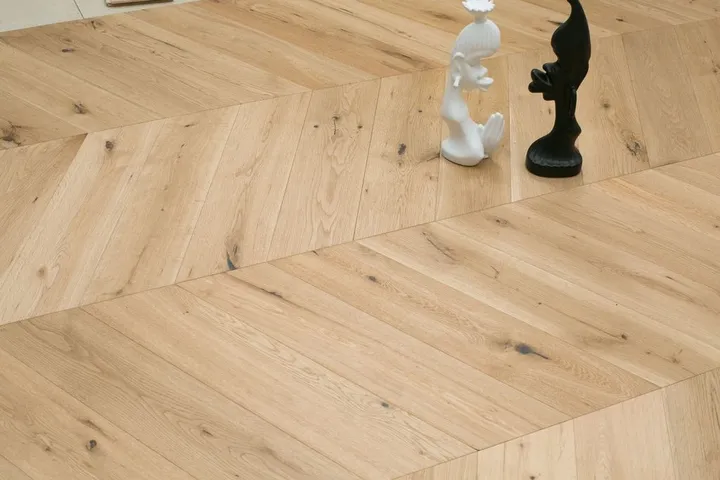
Comparing Parquet Flooring for Import and Project Orders
Parquet flooring is a wood or wood-look floor built from small planks or blocks into a repeating geometric pattern - herringbone, chevron or a block design - rather than plain parallel boards. For an import, distribution or project order, compare pattern and layout, solid versus engineered construction, species and grade, finish, plank dimensions, subfloor and moisture conditions, installation method and care. George’s approved custom herringbone wood offering covers the wood route for this pattern; parquet-look laminate, SPC and vinyl are market options, so ask about availability for the specific project.
- Pattern and layout: herringbone, chevron and block patterns need different plank pairs, borders and laying directions.
- Construction: solid blocks and engineered boards with a veneer face behave differently over a subfloor.
- Species, grade and finish: grain, color variation, knot allowance and surface treatment set the look.
- Site conditions: subfloor flatness, moisture, acclimation and the installation method required by the product’s own instructions.
To request a quotation, send the product type, pattern, size, quantity and destination, with a floor plan showing room sizes, laying direction and any borders. Wood flooring orders can start from 100 square meters; the MOQ for each product depends on the product category and the degree of customization and is confirmed in the quotation. George can send specifications, warranty terms and installation documents for review before the order is confirmed, and free corner samples of the multilayer engineered wood flooring are available with freight paid by the buyer. Installation and site requirements should follow the product’s own instructions.
Herringbone Pattern and Layout
Herringbone parquet flooring is built from two mirrored plank shapes: a left-hand and a right-hand piece meeting at a right angle, so each plank end butts into the side of the next. Plank length is normally a multiple of its width, and the pairs are ordered together. Waste runs higher than in a straight lay because of the angled edge cuts.
Fix the laying direction before cutting: most rooms run the pattern with the longest wall or toward the main window, and borders at walls, doorways and thresholds are planned at the same stage. Subfloor flatness matters, because dips show in the zigzag joints. George provides custom herringbone wood flooring for villas, apartments, hotels, restaurants, offices and commercial projects, with custom sizes and finishes confirmed in the quotation. See herringbone flooring.
Wood Parquet Construction
Parquet wood flooring is made in two constructions. Solid blocks are timber through the full thickness and move across the whole section with moisture; engineered boards carry a hardwood face over a stable core, which limits movement and suits wider formats. Species sets hardness, grain and color variation, and the finish - oil, lacquer or brushed matt - changes how marks show and how the floor is cleaned.
Moisture requirements and the installation method should be settled before the order, following the product’s own instructions where they vary. George supplies wood flooring in solid and engineered formats and can provide construction details, moisture requirements and installation methods for each option. Specifications, warranty terms and installation documents can be sent for review before the order is confirmed, and a specific core construction or surface treatment is confirmed in the quotation. See engineered flooring for layer detail.
Oak Appearance and Grade
Oak is a hardwood with an open grain and a warm range of tones, from pale straw to deeper brown, and oak parquet flooring reads differently across grades. A clean grade keeps color and grain even from block to block; a rustic grade allows knots, mineral streaks and sapwood. Finish works with grade: a natural oil lifts grain contrast, a filled matt lacquer flattens it.
Stability follows construction more than species. A thick solid oak block takes up and gives off moisture across its full thickness and needs a dry, stable subfloor; an engineered board with an oak face over a cross-banded core moves less and holds shape in wider formats. For an engineered option, the face and core construction are set out in the product documentation. Pattern, grade and format are confirmed in the quotation.
Engineered Parquet Construction
Engineered parquet flooring is built in layers: a hardwood face veneer, core layers laid at angles to each other, and often a backing. The cross-banding holds the board flat, so face thickness, core construction, and joint type matter as much as the species on top. A thicker face leaves more material to work with over time.
Check the edges and surface too: tongue and groove or click joints change how the pattern lines up, and a factory finish removes on-site sanding. George supplies engineered hardwood in multilayer constructions and can send specifications, warranty terms and installation documents for review before the order. Site moisture requirements should be matched to the method in those documents, and follow the product’s own instructions where they vary.
Vinyl and SPC Options
Parquet vinyl flooring is a printed decor layer under a clear wear layer, over a synthetic core, and it is best treated as a general option rather than a wood substitute. SPC has a rigid mineral core and holds a crisp pattern; flexible-core PVC is softer underfoot and easier to cut around details. Compare wear layer, click versus glue-down or loose-lay fitting, seams, and subfloor flatness.
Flexible-core PVC vinyl is the product family offered in dry-back glue-down, loose-lay and click formats. Parquet-look SPC and parquet-look flexible-core PVC are market options; ask about parquet-look availability, wear layer and format for the specific project, and confirm the approved installation method for the selected product. Click and loose-lay formats need a flat, sound subfloor; glue-down spreads load across each plank. Room suitability depends on traffic, moisture and how the floor will be cleaned, and installation should follow the product’s own instructions. More on vinyl flooring.
Laminate Parquet Options
Parquet laminate flooring is a printed decor layer under a transparent wear sheet, pressed onto a high-density core with a backing. The joint system decides how tightly pattern lines meet, and the underlay affects sound and how much subfloor unevenness the floor tolerates.
Parquet-look laminate is a market option: pattern, wear layer grade and board size are chosen for the project; ask about availability for the specific requirement. The laminate flooring page covers the wider range.
Bamboo Parquet Considerations
Bamboo is a grass rather than a timber, and bamboo flooring is formed by pressing strips or strands with adhesive under heat and pressure. Strand construction gives a denser, more uniform board; strip construction keeps visible nodes and a more natural line. Both respond to moisture, so acclimation, subfloor condition and the finish and fitting method should be settled first.
Bamboo parquet is a general buying option; dimensions, density and finish should be confirmed for the intended supply before a pattern is cut. Joint type and coating also vary between supplies, so samples and a written specification are worth agreeing first. Borders, thresholds and edge cuts should be planned with the plank size in mind.
Solid Oak Parquet Considerations
Solid oak parquet flooring is milled from one piece of oak per block, so thickness, moisture content and subfloor preparation all matter. Solid blocks move more than engineered boards and need a dry, stable substrate plus room to expand at edges. Surface finish and the ability to sand back later depend on how much timber sits above the tongue.
Compare that with engineered boards, which keep an oak face but resist movement through a cross-banded core and suit wider formats and floating installation. George supplies solid and engineered wood formats and confirms the exact species, dimensions and construction in the quotation. Sanding and refinishing requirements should follow the product’s own instructions.
Request a quotation
Describe your project, rooms and quantity, and we will suggest flooring options to quote.
Or write to sales@engineeredflooringsupplier.com