Herringbone Engineered Wood Flooring: A Buyer’s Guide
Herringbone engineered wood flooring pairs a real wood face with a stable multilayer core; rectangular boards meet at right angles to form the pattern. This guide covers board construction, pattern layout, species and finishes, cost factors, room suitability and ordering.
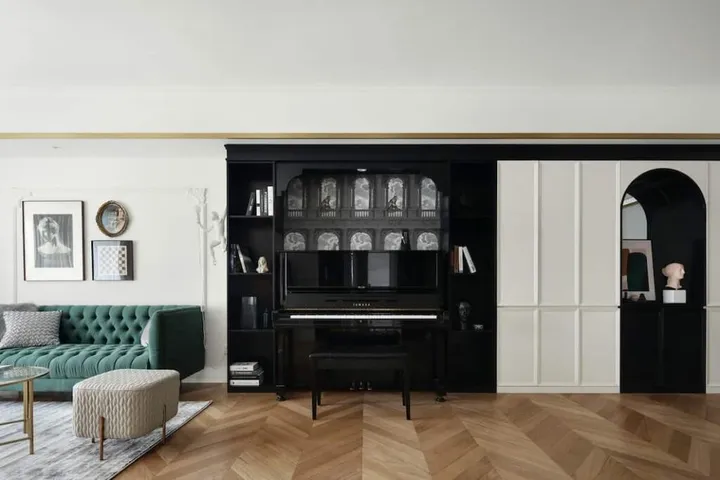
Herringbone Engineered Wood Flooring: What It Is and How to Choose
Herringbone engineered wood flooring uses engineered boards, typically rectangular, laid so each board meets the next at a right angle and the ends form a stepped zigzag. Chevron differs: its plank ends are angled so they meet in a straight V. The board itself pairs a real wood top layer with a plywood or multilayer core. The core carries the structure and keeps each board flat; the top layer supplies the species, grain and color you see. George offers engineered hardwood in 2 PLY, 3 PLY and 3 LAYER constructions and custom herringbone wood flooring for villas, apartments, hotels, restaurants, offices and commercial projects.
Choosing a specification means weighing top-layer species and thickness, core construction, board dimensions and the pattern scale they produce, prefinished or unfinished surface, color and grade, wear expected in each room, subfloor type and installation method, and MOQ, lead time and shipping. Match the build to the traffic: a board for a quiet bedroom is rarely right for a hotel lobby.
To get a comparable quotation, send project details and a floor plan through the inquiry form: room areas, preferred species and color, sheen level, board size or pattern scale, subfloor and intended installation method, and destination. George can send product specifications, warranty terms and installation documents for review before the order is confirmed.
Engineered wood flooring specifications
| Parameter | Value |
|---|---|
| Material | Solid Wood |
| Model NO. | WF01 |
| Size | 910*122*18mm |
| Function | Waterproof |
| Moisture Content | 7~9% |
| Color | Yellow |
| Installation Method | Floating |
| Joint System | Tongue and groove |
| Type | Oak |
| Usage | Household, Outdoor, Commercial, Sports |
| Engineered Wood Flooring Type | Multilayer Engineered Wood Flooring |
| Installation Type | T&G |
| Customized | Available |
| Base Material | Eucalyptus |
| Installation | Install Easily |
| Specification | custom size |
What Engineered Wood Floorboards Are Made Of
An engineered board is a stack. The wear layer on top is the wood you see and can sand; it may be sawn from a block, which keeps a natural grain figure, or peeled, which is thinner and cheaper to make. Below it sit crosswise core plies and a backing that balances the stack and limits seasonal movement, which is why engineered wood floorboards hold shape across humidity swings better than a single piece of timber. Joints do not by themselves dictate installation: the approved method depends on the product, and where guidance varies, follow the product’s own instructions. WF01 has a tongue-and-groove joint system and is used for floating installation.
Compare board thickness, top-layer thickness, core build and finish sheen across samples before ordering; a thicker wear layer allows more sanding later and feels firmer underfoot. The table labeled “WF01: General engineered wood construction example” uses WF01 as an engineered wood construction reference, including its oak face and eucalyptus base; it does not establish herringbone dimensions, joints or installation methods for the herringbone layout. Other species, widths, thicknesses and finishes can be requested subject to availability and confirmed in the quotation. Free corner samples of the multilayer engineered wood flooring are available, with freight paid by the buyer.
How the Herringbone Pattern Works
A herringbone floor is built from two mirrored boards, a left and a right, typically rectangular and set at right angles so their ends meet in a stepped zigzag. Chevron uses boards with angled ends that meet in a straight V. Pattern scale follows board length and width: long, narrow boards give a stretched V, short boards a tighter repeat. Single herringbone uses one board size throughout; double herringbone sets pairs together for a denser look, and borders and friezes frame the field in either herringbone flooring layout.
Setting out decides the finished look. Work starts from a centre line so the pattern stays square to the main sight line, and angled perimeter cuts create a wastage allowance above a straight-plank layout. Check subfloor flatness and moisture, acclimation time and expansion gaps at walls before laying; follow the product’s own instructions where these vary. George offers wood flooring in solid and engineered formats and can provide construction details, moisture requirements and approved installation methods for each option.
Cost Factors and Requesting a Quote
Several factors drive the price of engineered flooring: top-layer species and thickness, core construction, board size and pattern complexity, finish type, order quantity, packing and shipping terms. Herringbone adds cutting and sorting work compared with a straight plank, and small boards in a fine pattern take more labor over the same area than long ones do.
Affordability comes from balancing cost against performance. Thinner top layers and standard board sizes cost less but leave less material for later sanding; simpler patterns and prefinished boards cut on-site labor; core quality and moisture stability are worth paying for, because a board that cups or gaps costs more to correct than to buy well. Compare total project cost, not the board price alone.
Request a quotation with project details and a floor plan through the inquiry form; quantities, packing and applicable trade and payment terms are agreed in each quotation.
Species and Color Options, Including Walnut
Species sets the color and grain character of flooring more than any other choice. Walnut is a general flooring option with a darker, warm brown range, from chocolate to soft grey-brown, and a looser, more figured grain than oak; it takes oil warmly and holds a satin lacquer well. In herringbone, walnut’s variation reads along the zigzag. Oak, or white oak herringbone for a lighter field, is the usual comparison.
Practical points for walnut: expect color variation between boards, allow for light sensitivity over time, and note that walnut is softer than oak, so it suits interior rooms with moderate traffic better than busy entrance halls. Walnut can be requested for custom herringbone wood flooring, subject to availability, alongside the engineered constructions George offers in 2 PLY, 3 PLY and 3 LAYER builds. Confirm species, grade and finish in the quotation.
Grey tones come from staining, from fuming or smoking, or from brushing and whitewashing. Grey finishes and other unverified specifications can be requested subject to availability and confirmed in the quotation.
Prefinished, Unfinished and Custom Finishes
Prefinished boards arrive sealed, are ready to lay and are simple to clean, with a factory-applied sheen that stays uniform across the floor. With unfinished boards, color matching, staining and sealing are done on site, which suits a specific tone or a continuous finish into adjoining rooms and avoids seams between factory batches. The trade-off is time: sanding, finishing, drying and moisture control all happen in the building.
On unfinished boards, check top-layer thickness against the sanding planned, check flatness and moisture content of boards and subfloor, and confirm the finish system and coat count before work starts; follow the product’s own instructions where these vary. Unfinished boards can be requested subject to availability and confirmed in the quotation. George can provide construction details, moisture requirements and approved installation methods for the option chosen.
Room Suitability, Ordering and Next Steps
Herringbone engineered wood flooring suits living areas, bedrooms, hallways, hotels, restaurants, offices and commercial interiors, where the multilayer core helps boards stay flat through seasonal humidity change. Bathrooms and other wet areas need more care: suitability depends on the product, joint tightness, perimeter sealing and the installation method, so confirm those points before committing a wet room to wood; follow the product’s own instructions where they vary.
Ordering follows a standard sequence: product type, size, quantity and destination, then sample, quotation, production, inspection and packing, and shipping. The MOQ for each product depends on the product category and the degree of customization, confirmed in the quotation. FOB, EXW, CIF and DDP terms can be quoted, and lead time is confirmed for each order.
George can send specifications, warranty terms and installation documents for review before an order is confirmed, and inspection photos and videos can be provided as agreed. Questions on sizes, samples or terms are answered on the FAQ page. George Group has showroom space in Foshan where buyers can compare materials and finishes, and George reports exports to international markets.
Request a quotation
Describe your project, rooms and quantity, and we will suggest flooring options to quote.
Or write to sales@engineeredflooringsupplier.com