Refinish Wood Floors: Process, Cost Factors and Replacement Options
Refinishing strips an old finish back to bare timber and builds a new surface on top. Refinishing work and flooring supply are separate; this guide covers the sequence, the floors that cannot be sanded, what drives cost, and when replacement boards make better sense, alongside the flooring products George provides.
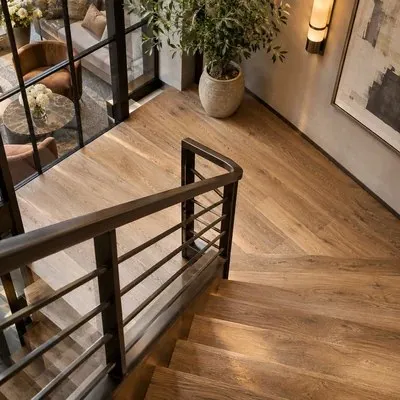
What Refinishing a Wood Floor Involves
The short answer is that most wood floors can be refinished as long as there is enough material left to sand. Wood floors that are solid timber, or engineered boards whose wear layer above the core is thick enough to take more than a light screen, can generally be refinished. Thin veneers, laminate, SPC and vinyl cannot be refinished by sanding like wood; sanding can damage the protective surface and decorative finish, so those floors are replaced instead.
The reference sequence is inspection, then sanding in several passes, then filling gaps and defects, then staining if a color change is wanted, then sealing and finish coats, then curing. Sanding produces dust even with extraction on the machine, each coat needs its own drying time as specified by the finish manufacturer, and furniture has to be moved out or gathered into one area before work starts. Rooms stay out of use while the finish hardens.
Refinishing is on-site work priced in the project’s own market. George supplies solid and engineered flooring; buyers comparing product options can look at the hardwood flooring and engineered flooring ranges. For buyers replacing part of a floor, submit the existing board dimensions, joint profile and finish so availability and compatibility can be checked.
Refinishing Hardwood Floors
Solid hardwood takes sanding well because the surface is the same timber all the way down, although sanding depth is limited by the usable wood above the tongue and fasteners, so an old strip or plank floor can usually be brought back more than once. What matters is the order of work: each stage removes the marks left by the one before it.
- Check board thickness and identify the existing finish before anything is sanded.
- Punch any proud nails and set fixings below the surface.
- Sand in stages with the grain, from coarse grit to fine.
- Fill gaps, splits and dents, and swap out boards that are beyond filling.
- Stain if required, then seal and apply the finish coats.
- Abrasion between coats only if the finish manufacturer calls for it; follow the manufacturer’s times for foot traffic and furniture return.
A careful owner can manage cleaning, small touch-ups and a maintenance coat after a light screen on hardwood floors, along with moving furniture and keeping dust contained. Drum sanding, edge work and the final coats are where experience shows, because an uneven pass or a heavy coat is hard to undo. Where a run of boards is past sanding, replacement flooring is the practical answer; George supplies solid and engineered flooring, and part-floor replacements need the existing board dimensions, joint profile and finish so availability and compatibility can be checked.
Two checks come before sanding in older buildings. Paint on trims and around openings in housing built before 1978 may contain lead; under the U.S. EPA Renovation, Repair and Painting Program, covered work in U.S. pre-1978 homes and child-occupied facilities requires a certified firm and an assigned certified renovator, and other workers may receive on-the-job training. Old sheet flooring, tile and adhesive should be tested for asbestos before any removal.
Finish choice changes how a floor feels underfoot as well as how it looks. An oak-wood finish study measured the coefficient of friction after coating by sliding a rubber shoe sole along the wood attached to a force sensor; grip differs between finishes, sheens and levels of wear, so the product and its maintenance guidance decide the result.
Restaining Hardwood Floors
Restaining hardwood floors starts as a sanding job: the old finish and the previous stain are removed back to bare timber, a different stain goes on, and the sealer and topcoats follow, with application times and recoat guidance taken from the finish manufacturer. There is no way to shift a stain without removing what sits above it, and it only works where enough wear layer remains after the old surface is sanded away.
Species and grain decide how far the color can move. Open-grain species such as oak draw stain deep and can take it unevenly, while dense species absorb less and shift only slightly. Going lighter is the hard direction, because pigment left deep in the grain from a dark stain often stays visible. A test patch in a cupboard or under a rug shows what the boards will do before the whole area is committed.
Custom finishes can be discussed where the product allows, and a stain, sheen or color preference should be confirmed in the order details rather than assumed. Where restaining is not sensible, replacement boards are the practical option.
Herringbone Wood Floor Refinishing
A herringbone floor is sanded on site in the same way as plank flooring, but the surface is harder to keep even. The blocks are small, and conventional herringbone exposes face grain; the grain direction alternates from piece to piece, and that alternating orientation changes the direction of the grain across the floor, so a sander that cuts harder in one direction leaves a patchy sheen. Even passes and a light touch at the block edges keep the pattern reading cleanly.
Refinishing is limited by the wear layer of the blocks. Pattern floors are sometimes thin, and some are laid as veneered panels rather than solid blocks. Where the pattern has been sanded through, or blocks are lifting, loose or worn past the surface, replacement is the realistic option, and replacement also makes sense when the pattern itself has failed rather than the finish.
George provides custom herringbone wood flooring for villas, apartments, hotels, restaurants, offices and commercial projects, and the herringbone flooring range covers new pattern work. Refinishing an existing pattern floor is priced after the blocks and the remaining wear layer are assessed.
Cost Factors for Refinishing Wood Floors
Refinishing floors is priced room by room after the floor is seen, so the variables matter more than any single rate. The main ones are floor area and how the rooms are shaped, species and grain, the condition of the existing finish and how many sanding passes it needs, the stain and finish selected, repairs such as gap filling, water damage or board replacement, furniture moving, dust control, edge work in tight spaces, and local labor rates.
- Solid or engineered boards, and how much wear layer is left.
- Board width and how complex the pattern is to sand.
- The number of finish coats and the sheen chosen.
- Stain complexity, including any test patches.
- Repair of damaged or cupped boards before sanding starts.
- Site access: stairs, lifts and the distance from the loading point.
Refinishing and replacement are priced differently. George’s quotation covers replacement or new flooring products, and buyers weighing refinishing against replacement can send the product type, size, quantity and destination through the inquiry form or sales email for a product quotation. Finish and stain choices are confirmed in that quotation.
Wood Floor Restorers and Screen-and-Recoat
A restorer or a screen-and-recoat is a surface treatment: the floor is cleaned, lightly abraded with a screen or pad, and a maintenance coat or restorer is applied so it bonds to the finish already there. It improves dullness, light scratches and worn traffic lanes. It cannot fix bare wood, deep scratches, stains that have reached the timber, finish worn through to the wood, cupping or gapping.
A restorer is not a substitute for sanding and refinishing; it buys time on a floor whose finish is still intact. Compatibility has to be tested in a hidden area first, because a coat that does not bond will peel. Indoor air matters during any coating work: the EPA reports that concentrations of many VOCs can be higher indoors than outdoors, and that levels may rise during and for several hours after activities such as paint stripping.
The maintenance product should match the finish already on the floor, and compatibility has to be tested in a hidden area first, because a coat that does not bond will peel. Follow the product’s instructions for test area and recoat times.
Hickory Wood Floors
Hickory is a dense North American species with strong natural color variation from board to board. The density slows sanding and dulls abrasives faster than softer species. Stain absorption is uneven, so a clear or natural finish keeps the contrast that people choose hickory for, while a dark stain can look blotchy unless a conditioner is used first. Prefinished boards with beveled edges change appearance once sanded flat.
Refinishing hickory calls for slower sanding passes and fresh abrasives because the density dulls paper quickly, and a test patch helps confirm how the boards will take a stain before the whole area is committed.
Refinish Wood Floors FAQ
These are the questions that come up most often about bringing a worn wood surface back, from day-to-day cleaning products to whether a house can stay occupied during sanding, and which floors should never be sanded at all, whatever finish is on them.
How are hardwood floors refinished, step by step?
The boards are checked for thickness and the existing finish, nails are punched, and the surface is sanded in stages with the grain. Gaps and defects are filled, stain is applied if a color change is wanted, then sealer and finish coats go on, with abrasion between coats only if the finish manufacturer calls for it; follow the manufacturer’s times for foot traffic and furniture return.
Is vinegar and dish soap safe for hardwood floors?
On a sealed floor, a cloth wrung almost dry is the safer routine. Vinegar is acidic and repeated use can dull some finishes, and dish soap leaves a residue that attracts dirt. Follow the care guidance for the finish that is on the floor, and never leave standing water on the boards.
Can the house stay occupied while floors are refinished?
Often part of the home can stay in use if the work is staged room by room, but refinished rooms are out of service while coats dry and cure, and dust and solvent odor travel through the building. Plan access to the kitchen and bathroom, and expect higher indoor VOC levels during coating and for several hours afterwards.
What type of wood flooring cannot be refinished?
Laminate, SPC and vinyl cannot be refinished by sanding like wood, because sanding can damage the protective surface and decorative finish. Engineered boards with a thin veneer cannot either, and neither can a floor whose wear layer is already worn through. Old sheet flooring, tile and adhesive should be tested for asbestos before any removal.
Sourcing Replacement Wood Flooring from George
George Design & Construction Co., Ltd. (George Group) is a building-materials company based in Foshan, China, established in 2006, and operates as a one-stop supplier with its own factories and selected suppliers. George reports 7 manufacturing plants in Foshan with a combined area of over 100,000 square meters, and has 40,000 m² of showroom space where buyers can compare materials and finishes. Wood flooring is supplied in solid and engineered formats, with construction details, moisture requirements and approved installation methods for each option.
For flooring orders, George can send product specifications, warranty terms and installation documents for review before the order is confirmed. Free corner samples of the multilayer engineered wood flooring are available, with freight paid by the buyer. Trade terms such as FOB, EXW, CIF and DDP can be quoted, the applicable term is confirmed in each quotation, and inspection photos and videos can be provided as agreed.
Sources
Request a quotation
Planning a flooring project? Send the type and quantity for a supply quote.
Or write to sales@engineeredflooringsupplier.com