Heart Pine Flooring: Buyer’s Guide for Selection
Heart pine flooring is a softwood floor cut from the dense heartwood of older pine trees and valued for its tight grain and warm color. This guide covers formats, grades, knots, moisture, installation and care so buyers can assess and specify it with confidence.
Heart Pine Flooring: Buyer’s Guide for Selection
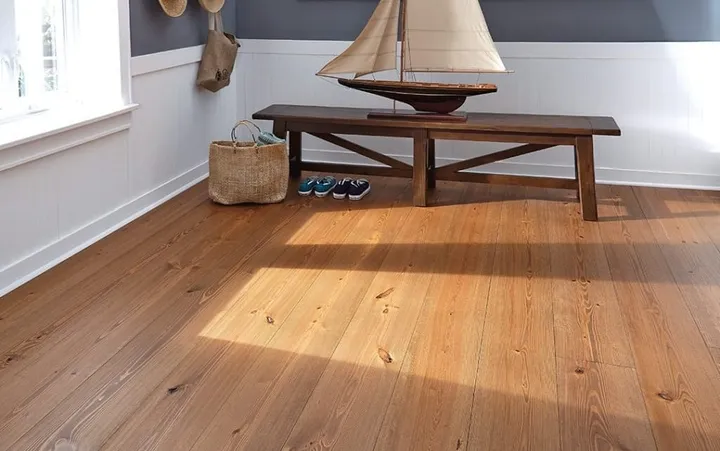
Heart pine is a description rather than a single species name. It is the dense heartwood at the center of older pine logs, cut from trees with slow growth and narrow rings, and it holds more resin and less sapwood than the pale outer wood. That combination gives heart pine flooring its tight grain, firm surface and amber to orange tone, which deepens with light. Buyers choose it for those long, calm grain lines and the warmth it gives a room.
Age and source change the look. Old timber has tight rings and darker heartwood, while younger pine has wider rings, more sapwood and a lighter, more blended face, so two orders sold under one name can differ. Grade controls how much of that shows: a clear grade keeps the face even, a lower grade allows knots and color shift. Finish matters too, since matte oil, satin lacquer and stain each read the grain differently.
- Format: solid planks are one piece of timber; engineered planks put a pine wear layer over a stable core, which suits wider boards and floors over concrete.
- Plank size: wide, thick boards show more grain and move more with humidity; narrower planks are steadier in small rooms.
- Moisture and acclimation: pine takes on and releases moisture, so boards and subfloor should reach a level suited to the finished building before work starts; follow the product’s own instructions for target moisture and acclimation where they vary.
- Installation: solid boards are usually nailed or glued, engineered planks can float, glue or nail, and the method and safety measures follow the construction, the subfloor and the product’s own instructions where they vary.
- Rooms and care: dry living rooms, bedrooms and studies suit pine; keep humidity steady, sweep grit, fit felt pads and clean with a damp, not wet, mop, following the product’s own care instructions where they vary.
George Design & Construction Co., Ltd. (George Group) is a building-materials supplier based in Foshan, China, established in 2006. Its wood flooring range sits alongside separate laminate, SPC and flexible-core PVC vinyl categories within George’s flooring range. Heart pine is a buyer request submitted for an availability check; species, grade, construction, sizes and finish are confirmed only after availability is established and are set out in the quotation.
Reclaimed Heart Pine Flooring
Reclaimed heart pine flooring comes from timber salvaged from old beams, joists, factory floors and mill stock, often from buildings taken down long after the trees were cut. The wood is often old-growth and may already be seasoned, so boards can carry character marks, nail holes, bolt stain, patina and grain that shifts from piece to piece. That history is what many buyers want, and it is also why each order looks different.
- Provenance: where the timber came from and how it was cleaned and de-nailed.
- Moisture content and acclimation: reclaimed stock varies more than new timber, so test it and condition it to the building, following the product’s own instructions where they vary.
- Grading and sorting: how much nail hole, metal stain and split is allowed on each face.
- Defect filling: whether holes stay open or are filled with resin or matching plugs.
- Finish: a finish that can move with the wood as humidity changes.
Expect variation between boards and between bundles, and plan the layout around it. Reclaimed heart pine is a buyer request rather than a stocked certainty, so the request should state provenance, grading, filling, finish and room suitability; availability and any confirmed details are handled in the quotation.
Southern Yellow Pine and Yellow Pine Flooring
Southern yellow pine is a group of pine species grown in the southeastern United States and graded together, and heart pine is the dense heartwood taken from within those trees, prized for tighter grain and warmer color. The wider southern yellow pine group includes more sapwood and faster growth, so it reads lighter and more open. Both are softwoods that sit below oak and maple on hardness, which shapes where they work well.
- Hardness and use: pine marks more easily than hardwood, so it suits bedrooms, living rooms and studies better than busy entrances.
- Construction: solid planks for nail-down over timber subfloors; engineered planks for concrete or wider boards.
- Plank size, grade and moisture: state width, thickness, grade and target moisture content, following the product’s own instructions for target moisture where specified.
- Finish, subfloor and installation: name the finish, confirm the subfloor is flat, dry and clean, and agree the fixing method, following the product’s own instructions where they vary.
Pine moves with humidity, so rooms with steady conditions hold it better than spaces that swing between damp and dry. For yellow pine flooring, put grade, width, thickness, moisture and finish in the request; for southern yellow pine, add species and construction. These are buyer requests, and availability and any confirmed specification are handled in the quotation.
Knotty Pine Flooring
Knots are where branches left the trunk, and they are a natural feature rather than a fault. Knotty grades keep them in, giving a casual, rustic look with strong figure across the floor. Knots in pine are hard and can be tight and sound or loose and open, and the mix of the two is what sets the character of the grade.
Knot size and frequency vary by grade, and so does the amount of color shift. Filled defects give a smoother, more even face, while open knots keep texture and collect dust in the hollows. Finish choices, from clear matte to deeper stain, change how much the knots stand out. Comparing a physical sample of the grade is the surest way to match expectations before ordering.
Knotty pine is a buyer request rather than a fixed grade. Grade, knot allowance, color and finish are best described in the request, along with species and construction; availability and any confirmed points are handled in the quotation.
Engineered Heart Pine Flooring
Engineered construction puts a pine wear layer over a stable core, usually plywood or a dense fiberboard, so the board resists much of the movement that wide solid pine can show. Thickness and wear layer depth set how much sanding the face can take over its life and how the floor feels underfoot. Plank size, bevel and finish are chosen the same way as for solid boards.
The floor still needs acclimation to the building, and the subfloor must be flat, dry and clean. Engineered planks can float over an underlay, glue down or, with the right core, be nailed; the method, acclimation and subfloor preparation follow the product’s own instructions and the site. Engineered heart pine flooring is a buyer request, and availability is checked before any specification is confirmed.
George’s engineered wood range includes multilayer constructions, and engineered flooring sits alongside solid wood, laminate, SPC and flexible-core PVC vinyl as separate categories within George’s flooring range. For engineered heart pine, the requested species and construction are part of the availability check and any confirmed details are set out in the quotation.
Requesting a Heart Pine Availability Check
Send the product type, size, quantity and destination to request a heart pine availability check, and George replies with a quotation if the request can be met. For wood flooring, orders can start from 100 square meters; the MOQ for each product depends on the category and the degree of customization and is confirmed in the quotation. Free corner samples of the multilayer engineered wood flooring are available, with freight paid by the buyer, and product specifications, warranty terms and installation documents can be sent for review before any order is confirmed.
The multilayer engineered wood flooring is packed in cartons on pallets as standard export packing; packing for other orders is confirmed in the quotation. Trade terms such as FOB, EXW, CIF and DDP can be quoted, with the applicable term set in each quotation. Inspection photos and videos can be provided as agreed, and custom sizes and finishes can be discussed where the product allows. Common questions are covered in the FAQ.
Request a quotation
Describe your project, rooms and quantity, and we will suggest flooring options to quote.
Or write to sales@engineeredflooringsupplier.com