Waterproof Engineered Hardwood Flooring Selection Guide
Waterproof engineered hardwood flooring is chosen by matching core construction, face species, finish and installation to the room a floor will serve. This guide sets out what the term covers and how buyers compare options before details are confirmed in a quotation.
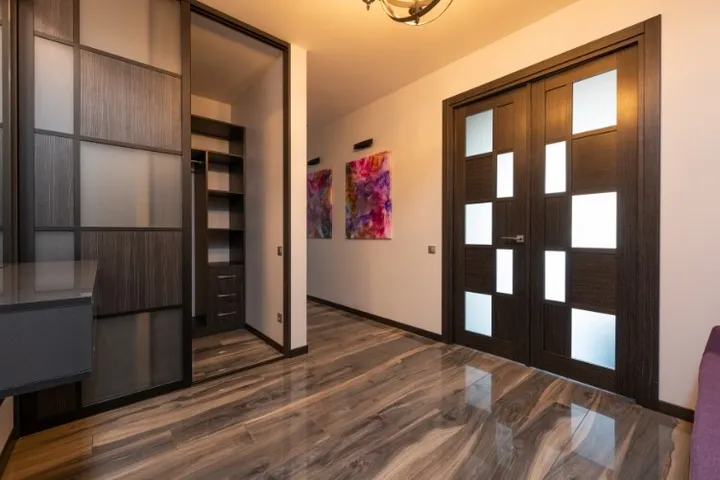
Waterproof Engineered Hardwood Flooring Explained
Waterproof engineered hardwood flooring does exist as a product type, but in flooring the word waterproof describes the core’s resistance to moisture rather than a promise that an installed floor suits a wet room. An engineered board is built from a layer of hardwood bonded over a core, so the species on the surface and the material underneath perform different jobs. Water resistance comes mainly from the core and the bond, while the finished floor’s behavior depends on the joints, the perimeter and the installation method used on site.
Cores differ in the way they are built. Some engineered boards use a plywood core made of several crossed veneers, others use a denser fibre or polymer core, and the choice affects how a board reacts to humidity and how stable it stays as indoor conditions change. The face species and the face thickness set the grain, color and surface performance. The finish, whether an oil, a lacquer or a factory-applied wear layer, decides how the surface handles traffic and cleaning. Samples show these differences faster than a specification line.
Waterproof hardwood flooring is a phrase buyers use loosely, and it helps to separate solid boards from engineered ones. A solid board is one piece of timber through its full thickness, so it responds strongly to changes in indoor humidity. An engineered board carries a thinner hardwood face over a stable core. Both can serve a project well when they are matched to the room and the substrate. George supplies hardwood flooring in solid and engineered formats and can provide construction details, moisture requirements and approved installation methods for each option.
George’s engineered wood flooring is available in 2 PLY, 3 PLY and 3 LAYER constructions, which place different numbers of layers under the hardwood face. The specification table on this page sets out one multilayer engineered board, WF01, listed with Type Oak and Base Material Eucalyptus. Free corner samples of that multilayer engineered wood flooring are available, with freight paid by the buyer. Species, finish, size and joint details you need are confirmed in the quotation where the product allows.
Engineered wood flooring specifications
| Parameter | Value |
|---|---|
| Material | Solid Wood |
| Model NO. | WF01 |
| Size | 910*122*18mm |
| Function | Waterproof |
| Moisture Content | 7~9% |
| Color | Yellow |
| Installation Method | Floating |
| Joint System | Tongue and groove |
| Type | Oak |
| Usage | Household, Outdoor, Commercial, Sports |
| Engineered Wood Flooring Type | Multilayer Engineered Wood Flooring |
| Installation Type | T&G |
| Customized | Available |
| Base Material | Eucalyptus |
| Installation | Install Easily |
| Specification | custom size |
Selection Criteria
Comparing engineered boards is easier with a fixed checklist than with a ranking. Apply the same questions to every candidate so the differences between constructions, faces and joints stay visible. The points below decide whether a board works in a given room, and each one should be checked against a physical sample and the quotation rather than assumed from a category name.
- Core construction and how the core resists moisture
- Face species and face thickness
- Finish type and surface wear resistance
- Seam design and perimeter treatment at walls and wet areas
- Installation method: floating, glue-down or mechanical fixing
- Room suitability, substrate condition and the sample review
For engineered floors specifically, count the layers and note the core material, then look at the face. A thicker face shows more of the species and gives the surface more depth; a thinner face keeps the profile lower. Board dimensions change the look of a room and the number of seams per area. Click edges, tongue-and-groove joints and glue-down assemblies behave differently at the seams, so check the recommended method for the room. Compare engineered flooring samples side by side under the light of the space.
A single ranking does not travel between projects: a floor that suits a bedroom may be a poor choice beside a shower, and a heavily textured board may not suit a retail interior. State the room, the substrate, the expected traffic and the maintenance routine, then check how each candidate meets them. Where a fully waterproof floor is required, verify that the complete installed system, meaning the board, joints, perimeter treatment and installation method, is approved for that requirement. Where SPC flooring is among the candidates, discuss its core water resistance separately and check how the full assembly is specified for the room. George’s engineered range covers 2 PLY, 3 PLY and 3 LAYER constructions, and other species or finishes are confirmed in the quotation where the product allows.
Cost Factors
Cost in engineered flooring comes from several places at once. The face species and its thickness set the material cost, construction adds layers and processing, and board dimensions affect the yield from each timber source and the number of pieces per area. The finish, the customization steps, the order quantity, the packing and the shipping terms all move the total as well. Comparing two quotes means comparing these items, not only the headline rate.
- Match the construction and face thickness to the room instead of choosing the heaviest option
- Use a standard board size where the design allows it
- Choose a finish suited to the traffic so the surface lasts through the project cycle
- Order the full area in one quantity to reduce handling per square meter
- Review packing and trade terms together, since FOB, EXW, CIF and DDP quote different cost scopes
Wood flooring orders can start from 100 square meters, and the MOQ for each product depends on the product category and the degree of customization; the applicable MOQ is confirmed in the quotation. Trade terms such as FOB, EXW, CIF and DDP can be quoted, with the applicable term confirmed per quotation. Buyers can send the product type, size, quantity and destination through the inquiry form or the sales email, together with project details and a floor plan, to receive a quotation for custom flooring or a standard construction.
Species and Appearance
Acacia is a species buyers sometimes specify for engineered flooring. Its grain is usually pronounced, with knots, swirls and strong contrast between earlywood and latewood, and its color can run from pale honey to deep brown within a single order. Acacia is dense, which helps surface hardness, and it moves noticeably with humidity, so construction and acclimation matter. The finish changes the look as much as the species does: a matte oiled surface reads differently from a filled, semi-gloss lacquer. Ask for a sample of the actual face.
Species and appearance are buyer choices. State the wood, the grain you prefer, the color range you can accept and the surface look you want, and treat the first sample as a starting point rather than a fixed color, because natural wood varies between boards and between batches. George confirms species, construction, finish and size in the quotation where the product allows, so the appearance approved before production is the appearance written into the order.
Grade and Surface Texture
Rustic grade is an appearance description, not a performance rating. A rustic engineered flooring board may carry open knots, mineral streaks, sapwood and a wide color range, and the surface may be brushed, hand-scraped, saw-marked or left smooth. These features hide wear and suit informal interiors, but they make a room busier than a clean grade would. Board dimensions matter here too: a wide, long plank shows the texture more strongly than a narrow strip. The finish then sets how much of that texture is felt underfoot.
The grade and the look are buyer choices. Send the sample or the reference image you want to match, note whether knots and color variation are acceptable, and say which surface texture the room needs. George confirms availability, construction, finish and size in the quotation where the product allows, so it helps to record the acceptable grade, color variation and any sample-reference requirements in the order documents.
Request a quotation
Describe your project, rooms and quantity, and we will suggest flooring options to quote.
Or write to sales@engineeredflooringsupplier.com